Anchored by Imagination, STEAM and Student Leadership
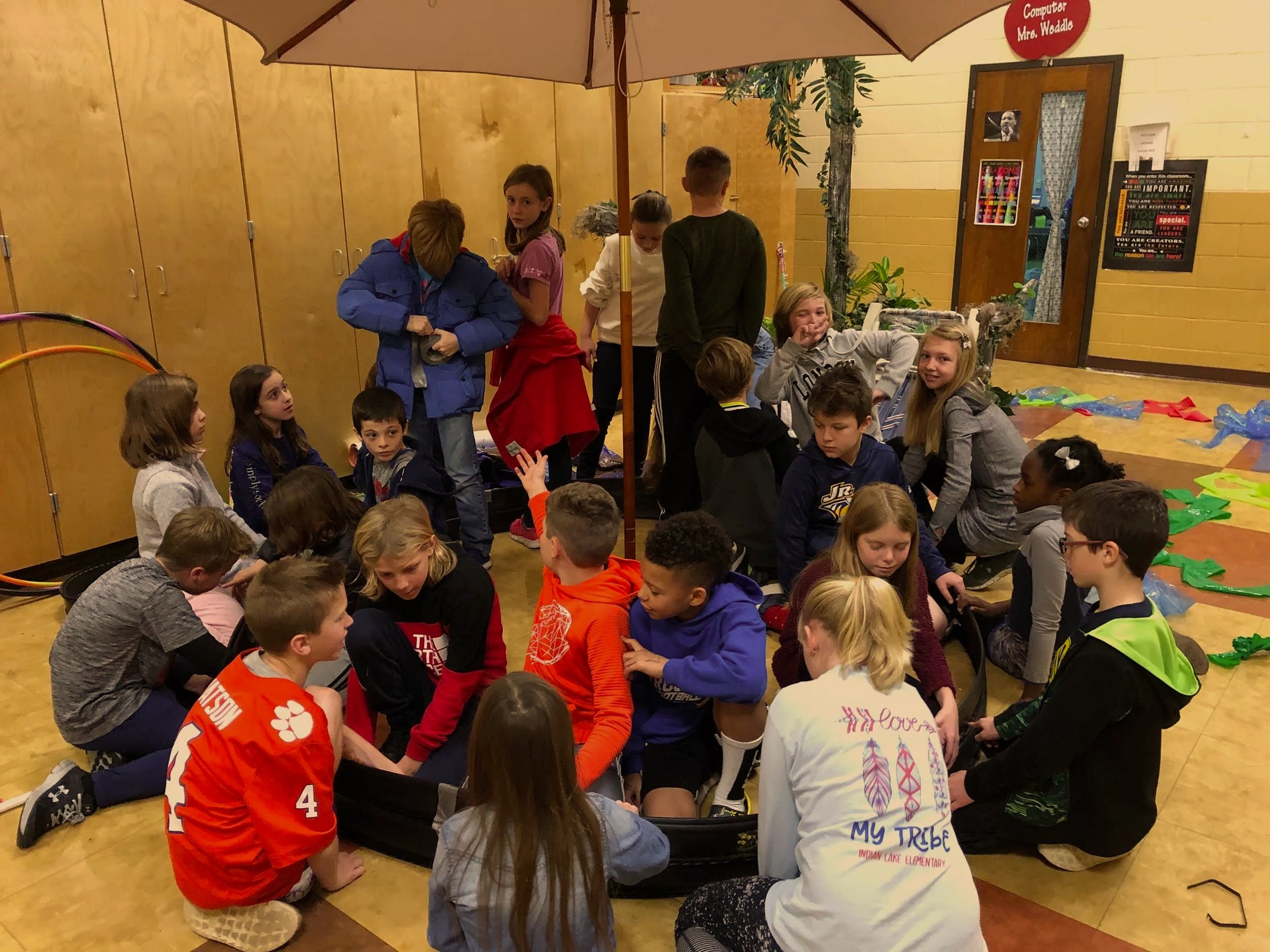
I stood on a platform before a sea of wide-eyed students, knowing we were about to embark on an unforgettable adventure. Our mission? To survive — using nothing but imagination, teamwork, and a collection of seemingly useless items. This wasn’t just any lesson on sustainability; it was “Shipwrecked!” a hands-on, Gilligan’s Island- inspired survival scenario designed to spark leadership, build resilience, and bring concepts of recycling, reusing and repurposing vividly to life.
I started low-key, with a demonstration of Appalachian basketry, weaving tradition, geometry, and engineering into one. Then, with a dramatic flourish of theatrical quick-change worthy of The Phantom of the Opera, I transformed the cafeteria stage into the deck of the Adventure—our “STEAM Cruise Ship Summer Camp”—complete with a deck umbrella, folding chairs, and tables set with plastic cloths.
As the screen behind me pulsed with the waves of the sea, I donned my lab coat and glasses—and my alter ego—welcoming them aboard in character.
After a seemingly typical lifeboat evacuation talk, I introduced the camp’s theme: Design Thinking for Sustainability. But I couldn’t keep up the calm demeanor for long— for soon enough, the “storm” was upon us.
While the screen behind me surged with stormy seas, teachers joined in, flickering the lights and aiming water guns at the passengers as others ran through the crowd, adding sounds of thunder and driving rain.
Cafeteria tables turned into lifeboats as we battled the imaginary waves. “Row!” I screamed,
“Row!” urging the students to pull with all their might—because the lifeboat speech hadn't really been an evacuation talk at all. It was training for collaboration under stress, and now they were being tested;)
The room was alive with energy, chaos and confusion, and for a moment, every student was lost in the thrill of the journey.
As the storm faded, the screen shifted to reveal a desert island; the stage transformed into a mess of cruise gear and broken “wreckage.” I steadied myself, checked the ship to shore radio, and in my calm camp-director voice dropped the news: the rescue crew wouldn’t be arriving for at least a week.
“You’ll have to build your own survival camp using the materials from the island and the wreck,” I announced. “I’m off to find water.” Then I left.
And that may have been the most important thing I did.
Gasps and murmurs of nervous excitement filled the room.
“She’s really not coming back!”
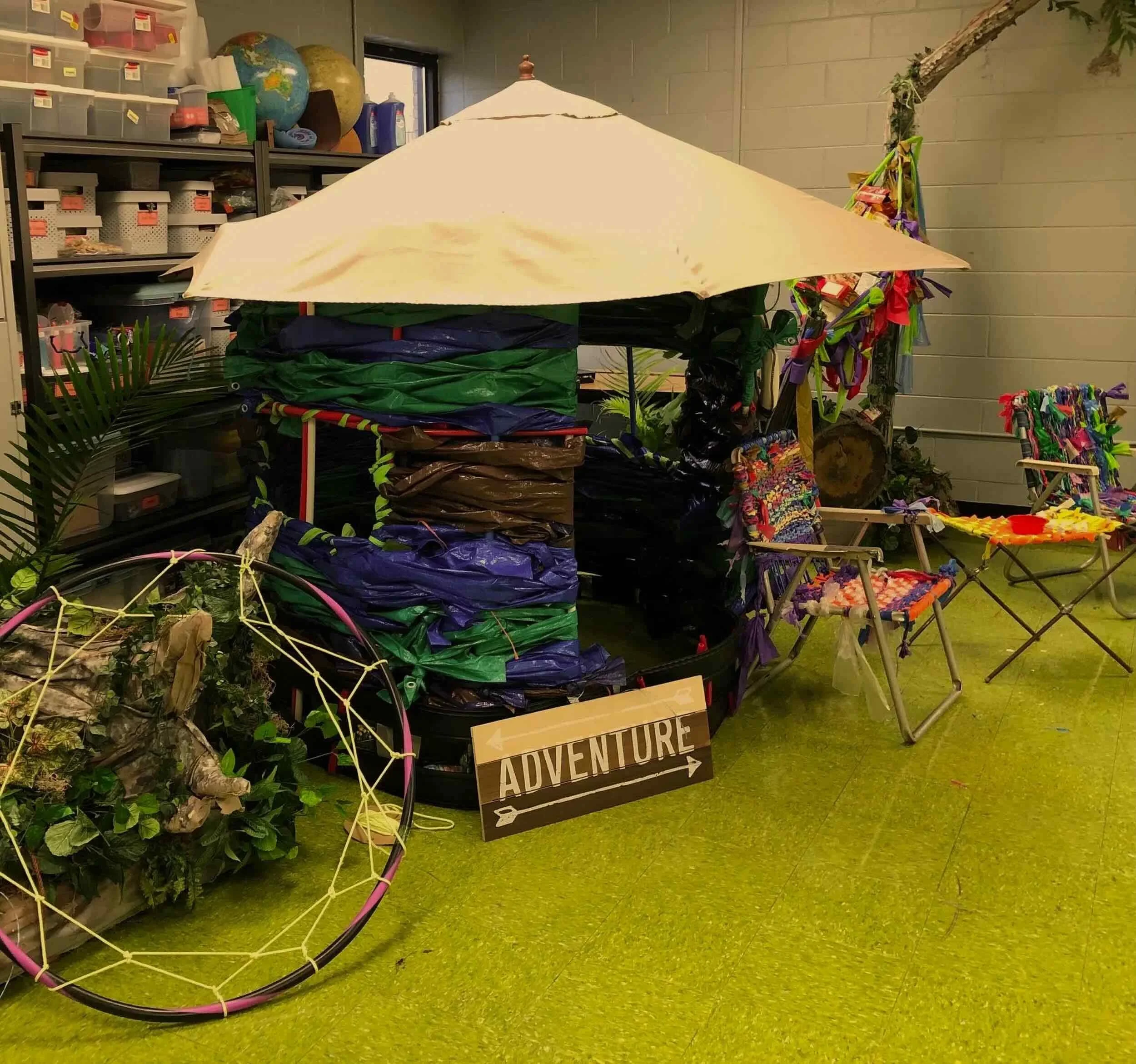
Armed with posters created by a dedicated 7th grade volunteer, my 5th grade leadership crew stepped forward and presented the group with shelter options. Each poster showed a structure—from teepees to roundhouses—along with pros and cons. After some discussion and debate, the students chose a roundhouse, casting their votes by dropping stones into buckets. The deck umbrella became their roof, flag poles served as uprights, and torn tarps were transformed into weaving material. Their design was set, and the excitement grew.
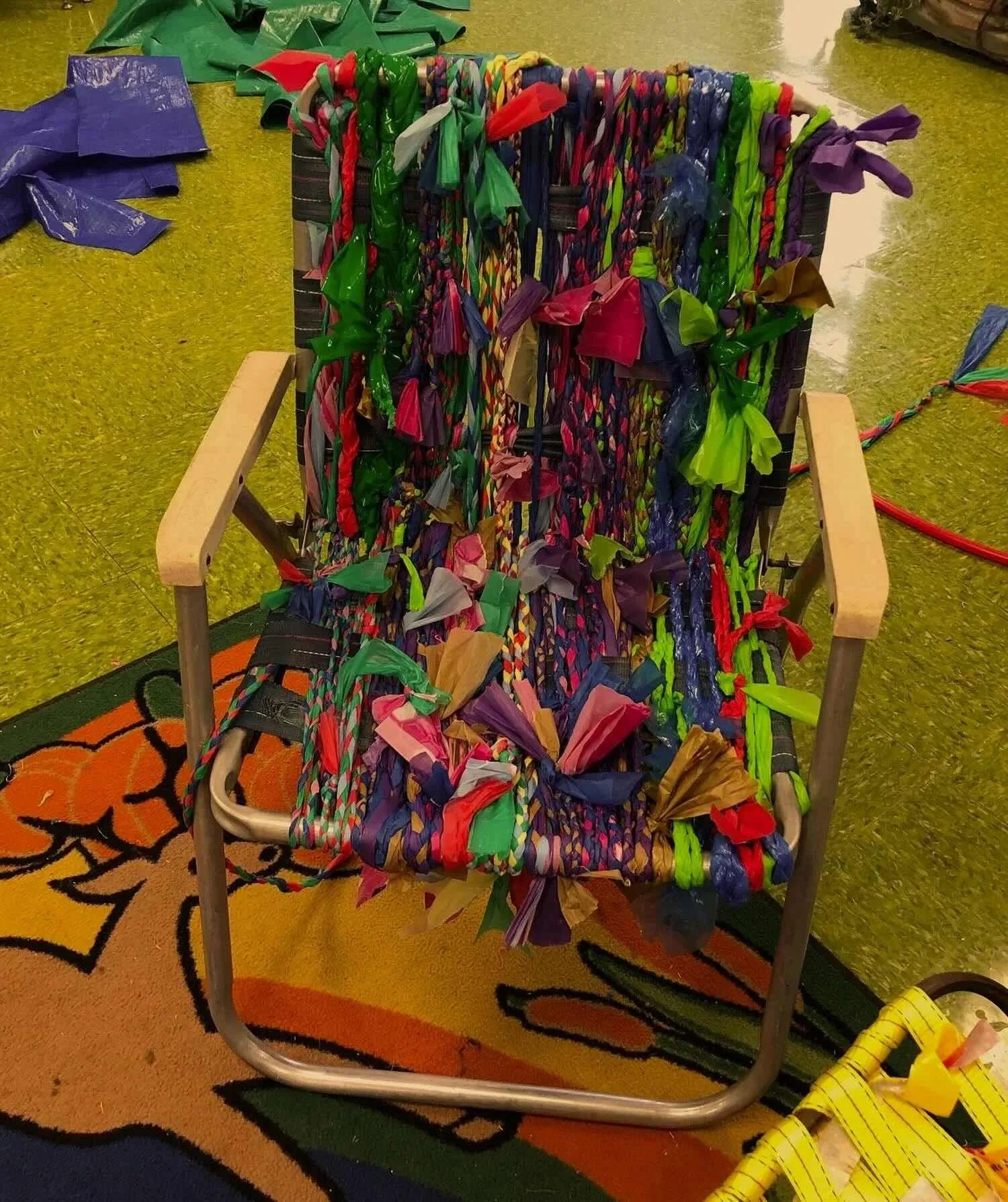
The logistics were intense: 245 students, each meeting me and the project for only 45 minutes over five days. Yet, with each group building on the last, united by their own shared mission, vision and construction paper strategic plan, we created something incredible—a sturdy 9x8 foot roundhouse, woven chairs, tables, hammocks - and even a makeshift sleeping bag.
Together, they discovered firsthand how resourcefulness and adaptation contribute to community sustainability, learning that sometimes, the best way to survive—is to create.
The arts are extraordinarily good at creating these spaces: places where imagination has consequences, where ideas have to become physical, where failure provides information, and where someone who may not ordinarily think of herself as a leader suddenly discovers that other people are following her.
Whether on a remote island or within an organization, leadership often calls for stepping back, trusting others to find their strengths, and watching as they breathe life into a community that’s uniquely theirs.
Together, they discovered firsthand how resourcefulness and adaptation contribute to community sustainability, learning that sometimes, the best way to survive—is to create.
The arts are extraordinarily good at creating these spaces: places where imagination has consequences, where ideas have to become physical, where failure provides information, and where someone who may not ordinarily think of herself as a leader suddenly discovers that other people are following her.
Whether on a remote island or within an organization, leadership often calls for stepping back, trusting others to find their strengths, and watching as they breathe life into a community that’s uniquely theirs.
Behind the Adventure
To build an experience like this for your own students, begin with:
A consequential challenge — Give students something that genuinely requires decisions, rather than a predetermined outcome to reproduce.
Useful knowledge — Introduce a skill or technique from science, mathematics, or art because the students will need it to solve the problem.
Interdependence — Design the challenge so that no single student can succeed alone.
Real constraints — Limited materials, time, information, or resources forces ingenuity.
Meaningful choice — Let students debate, decide, test, revise, and sometimes - be wrong.
Student leadership — Give students genuine responsibility for moving the work forward.
A strategic retreat — Once they have enough structure to succeed, resist solving the problem for them.
Let’s Compare Notes
If something here connects with a challenge, idea, or possibility in your own work, I’d love to hear from you.