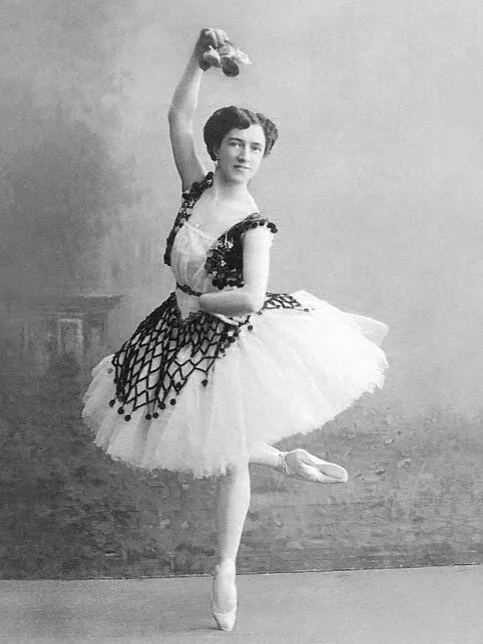
I love ballet.
I hated tap. Don’t get me wrong—I loved seeing it on stage, and I adored performing in musicals, but the actual study of it felt like a punishment. It was all counting, music theory and pounding, endless noise with none of the breadth of emotional expression my romantic spirit desperately craved. So, imagine my horror when the master teacher on the platform—a man whose career had started as a child alongside none other than Bill “Bojangles” Robinson—pointed directly at me. “You. Yes, you. You’re one of Porter’s students, right? Get up here.” My soul dropped to the bottom of my triple-reinforced character shoes. With a sense of doom, I made my way through the parting crowd and the scrutinizing gaze of more than 150 sets of eyes - aspiring dance teachers, their mentors, and masters from every discipline – dragging my 18-year-old self toward what I was sure was the gallows of my self-esteem. With as much dignity as I could muster, I raised my head high and mounted the steps of the platform.
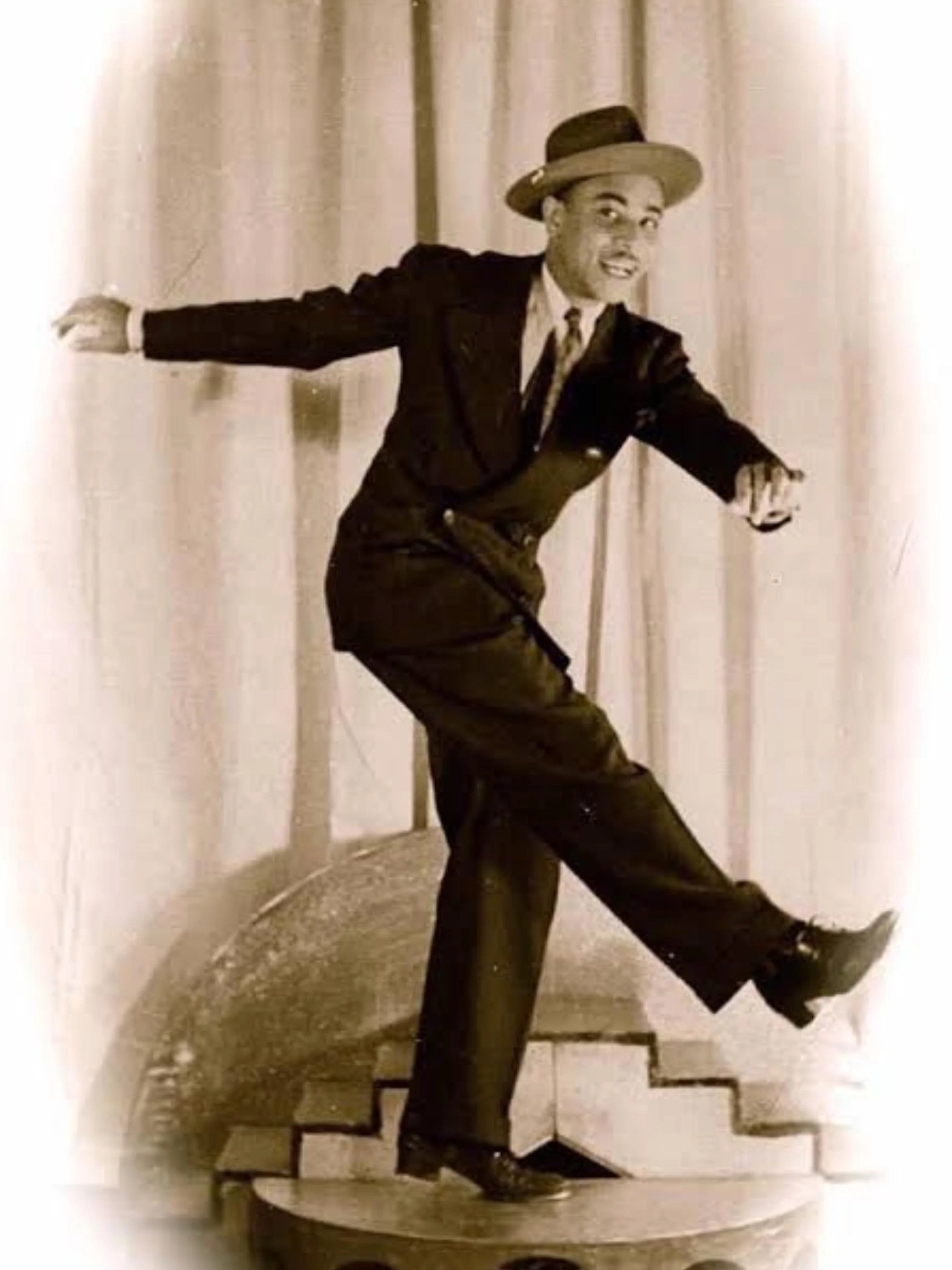
“Miss Kerr,” the teacher drawled in his mid-Georgia Southern, “I just watched you nail 16 single wings and pull 16 trenches. You do the hardest Vaudeville showstopper steps like they’re nothin’, but you can’t even put together a simple combination.” Ah. My execution, it seemed, would be carried out by public humiliation. “I know your teacher, so I know you’re trained.” Great. So, it’s all my fault. “You know what? You just got the job of being my demonstrator.” Wait. What? Why did this man hate me so much? Then he turned aside and whispered, “Trust me, honey. I’ll take care of you, but whatever you do, don’t think.”
For the rest of that long week—during sessions that felt like they lasted at least a hundred years—he broke down a three-minute daily exercise that covered every essential step and transition in tap. He showed how the hips motivate movement by shoving me around the stage with the nudge of a single finger at my center of gravity. He taught me to use my brain differently to replicate patterns by comparing it to playing the piano, and he instructed me to “scat” rather than count to avoid my signature problem of overthinking, letting my body’s innate wisdom and neural pathways take over. By the end of the week, I was not just getting by; I was slaying tap.
Forty years later, I realize that this sixty-something-year-old Black Vaudevillian was more than just a tough tap teacher; he was a guardian angel who set me on a path to excellence beyond my wildest dreams, handing me answers to questions I didn't yet know how to ask. In that week, he imparted foundational elements of pedagogy, framework and kinesiology, introduced me to the power of engaged repetition, and demonstrated the nuanced applications of educational psychology. This wasn’t just a lesson in tap—it was a masterclass in teaching, one that shaped the educational philosophy that would carry me into my future.
In Search of Excellence
My goal was never about simply refining technical skills; it was about creating an environment where students could flourish - emotionally, artistically, and technically. Since my childhood, I had revered the teaching of the arts not as a pastime but as a sacred trust that, I believed, could empower even the most challenged of learners to grow and thrive. But as I look back, I see how much the dance world, particularly during the Balanchine era I grew up in, glorified unhealthy practices. Weight loss was a measure of dedication, and harsh critique the usual method of instruction. Even as a teen in a recreational setting, I was aware of the confusing dissonance between the joy of artistic aspirations and the reality of the toll it took on its students. I was determined to find a better way.
I had studied hard to be a good teacher. We start young in this profession and by 18, I had completed a three-year apprenticeship and passed all my certifications. I was teaching at an upscale studio, running my own small school from a civic center, and interning with what would become a regional company. But despite these accomplishments, as I sat awake at 1 a.m. struggling with lesson plans for my next ballet class, I found myself increasingly disillusioned with the inconsistency and inefficiency of the traditional studio model. Too many students were aimlessly navigating their way toward some vague ideal of artistic achievement with fatalistic teachers who accepted the belief, “You’ll never make it.” Without a roadmap, most ended up nowhere at all. I felt this lack of a structured path didn’t just hinder progress; it failed to honor the trust students place in their teachers.
I realized what I longed for was a structured method, like the one I had learned from the tap master, a clear pedagogical system that used simplicity to empower. I yearned for a clear path that offered arrival at a successful destination but also versatility – one where students weren’t crushed by the weight of perfectionism or vague expectations but guided through thoughtful progressions toward mastery. I knew it was out there – but professional dance in the mid-80s was still largely an oral tradition, passed down from teacher to student, and I was not in the right part of the country to access it. I refused to let that stop me.
Fueled by frustration, I began a quest for solid methodology. Video was practically non-existent and books rare. I scoured libraries and clearinghouses, searching for texts, taking a job at a bookstore just to access ISBN numbers and using my discount to order antiquated titles while analyzing industry magazines. My self-led study of comparative methodology took me deeper than my studio apprenticeship, contrasting the work of Cecchetti, Bourneville, The Royal Academy of Dance, and what I could find of the Soviet method of classical ballet. I travelled hundreds of miles to observe master teachers in many disciplines, seeking to distill their approaches into a practical wisdom that resonated with the outcomes of excellence.
Building on what I had learned from the tap master, I applied the same concept to ballet, jazz and musical theatre, systematically breaking down movements into smaller components – positions, transitions, foundational elements – and analyzing their unique kinesiology. Hundreds of index cards shifted across studio floors as I searched for flow and pattern, categorizing across disciplines as I identified essentials.
What emerged, for me, was an understanding that all forms of dance share three key principles: a philosophy of alignment, a degree of turnout in the hip, and the dynamic use of the foot along the floor. Whether in ballet, tap, jazz or even folk dance, I felt if a dancer could grasp the stylistic interpretation of these basic motor principles, they would possess the key to becoming fluent and expressive in multiple styles of movement. I discovered that a simple incremental system that honors the body’s anatomy and the laws of physics was the key to expertise, to preventing injury, and to building the confidence needed to thrive onstage.
I was eager to test this theory. During a class session with what would soon become the Nashville Ballet, I broke protocol and offered a simple correction to a fellow corps member struggling with turns. She effortlessly whipped out four revolutions. “You shouldn’t be here!” she shouted. “You should be somewhere teaching!” Considering my experiment a success, I packed my dance bag, politely left, and didn’t look back.
I was a teacher.
Not long afterward, a friend surveyed the hundreds of index cards spread across my studio floor. “You know somebody already did all that, right?” She had trained with a Russian teacher in Chicago. That conversation changed the direction of my work.
She gifted me a copy of 100 Classes in Classical Ballet by Vera Kostrovitskaya. There, in the pedagogical system developed by Agrippina Vaganova, I found what I had been searching for: a methodology grounded not in the accumulation of steps, but in a scientifically organized progression through which strength, coordination, alignment, musicality, expression, and artistry could be developed as an integrated whole.
Books led to teachers. Teachers led to lineage. Study became certification with John White and Margarita de Saá, connecting my work through Oleg Tupine to the Russian tradition I had once struggled to access from hundreds of miles away.
And the search that had begun with a Vaudeville tap master, a frustrated eighteen-year-old teacher, and hundreds of index cards scattered across a studio floor eventually led to the honor of certification by the renowned Bolshoi Ballet Academy.
I had spent years searching for a clear path toward excellence.
I found one. And I have spent the decades since learning how to help individual dancers travel it.
Let’s Compare Notes
If something here connects with a challenge, idea, or possibility in your own work, I’d love to hear from you.